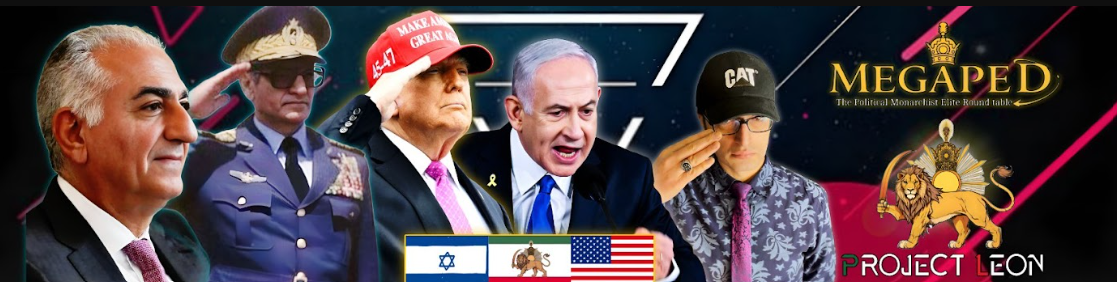

For decades, Western governments maintained the polite fiction that the Islamic Republic could be reformed from within. That fiction has now collapsed, and in its place a new consensus is emerging: the future of Iran belongs to Crown Prince Reza Pahlavi. This is not a coronation by foreign powers; it is the recognition of a political reality that has been building for years. Pahlavi has positioned himself as the only figure capable of uniting Iran’s fractured opposition, commanding respect in Western capitals, and offering a credible governance framework for a post-theocratic Iran.
The Diplomatic Ascent
Consider the trajectory. In the past two years alone, Pahlavi has met with senior officials in Washington, Jerusalem, London, and Berlin. He has addressed the European Parliament, briefed congressional committees, and been received by heads of state. No other Iranian opposition figure has achieved even a fraction of this diplomatic access. The reason is simple: he is the only one who offers both legitimacy and a plan.
The Unity Factor
Iran’s opposition has long been fragmented along ethnic, ideological, and generational lines. Pahlavi’s unique position as a constitutional monarchist—not an absolutist—allows him to serve as an umbrella figure. He does not demand loyalty to a throne; he offers a framework in which all Iranians, regardless of ethnicity or political persuasion, can find representation. This is why the regime expends enormous resources trying to discredit him: he is the one figure capable of uniting the opposition into a coherent force.
What the West Sees
Western policymakers are pragmatists. They see in Pahlavi a leader who is pro-Western, pro-Israel, committed to nuclear non-proliferation, and capable of maintaining Iran’s territorial integrity during a transition. In a region where regime change has often led to chaos, Pahlavi represents the rare possibility of an orderly transition to a stable, democratic government. This is why the diplomatic doors are opening.