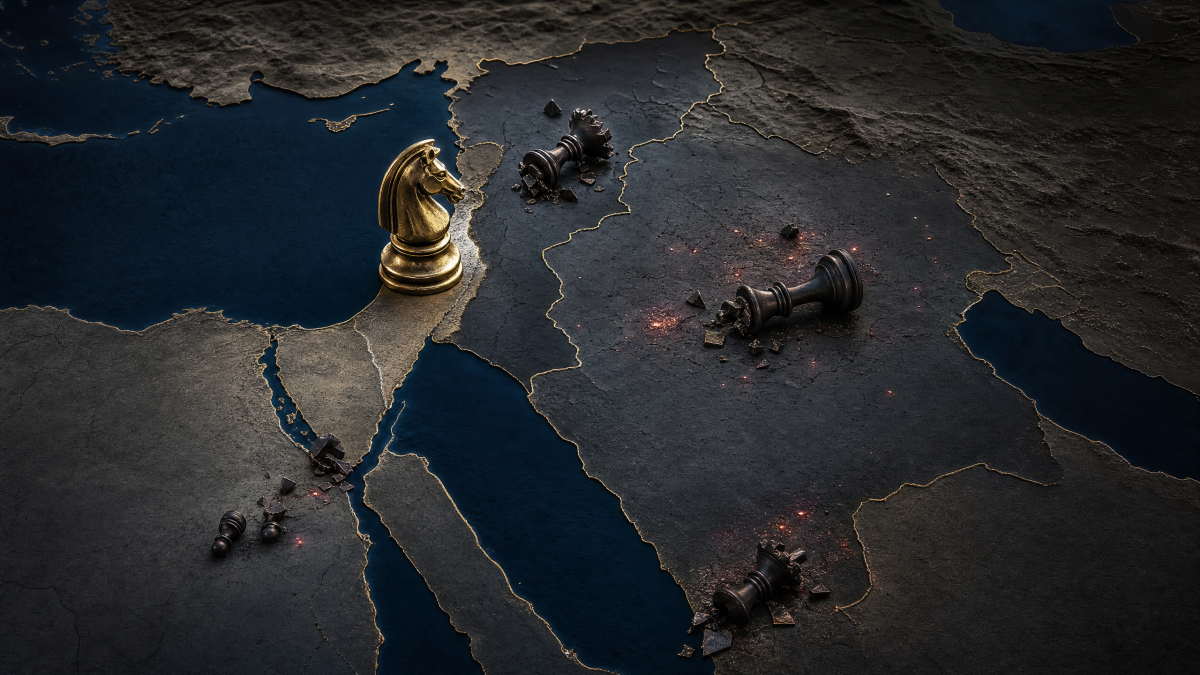
The Islamic Republic spent forty years and billions of dollars constructing a network of proxy forces stretching from Beirut to Sana’a. In less than eighteen months, Israel has reduced this architecture to rubble. The systematic dismantling of Hezbollah, Hamas, and the Houthi supply lines represents not merely a tactical victory but the complete invalidation of Iran’s regional strategy. The “Axis of Resistance” is now the Axis of Wreckage.
Hezbollah: From Army to Ash
Hezbollah was the crown jewel of Iran’s proxy network—a state within a state, armed with over 150,000 rockets and a battle-hardened fighting force. Israel’s campaign has systematically decapitated its leadership, destroyed its tunnel infrastructure, and degraded its rocket arsenal to the point of strategic irrelevance. The organization that once held Israel hostage can no longer project power beyond its own survival.
The Domino Effect
When Hezbollah fell, the entire proxy architecture began to collapse. Hamas, already devastated in Gaza, lost its primary external patron. The Houthis, cut off from Iranian resupply by the naval blockade, can no longer sustain their campaign against Red Sea shipping. Iraqi militias, seeing the writing on the wall, are quietly negotiating their integration into state security forces. The network that took decades to build has unraveled in months.
Strategic Implications
Without its proxy network, the Islamic Republic is naked. The entire deterrence strategy was built on the threat of multi-front retaliation through these proxies. With that threat neutralized, Iran faces its adversaries alone—with a military that, as we have documented, cannot withstand even a fraction of American power. The proxy graveyard is not just a military defeat; it is the death of the regime’s strategic doctrine.